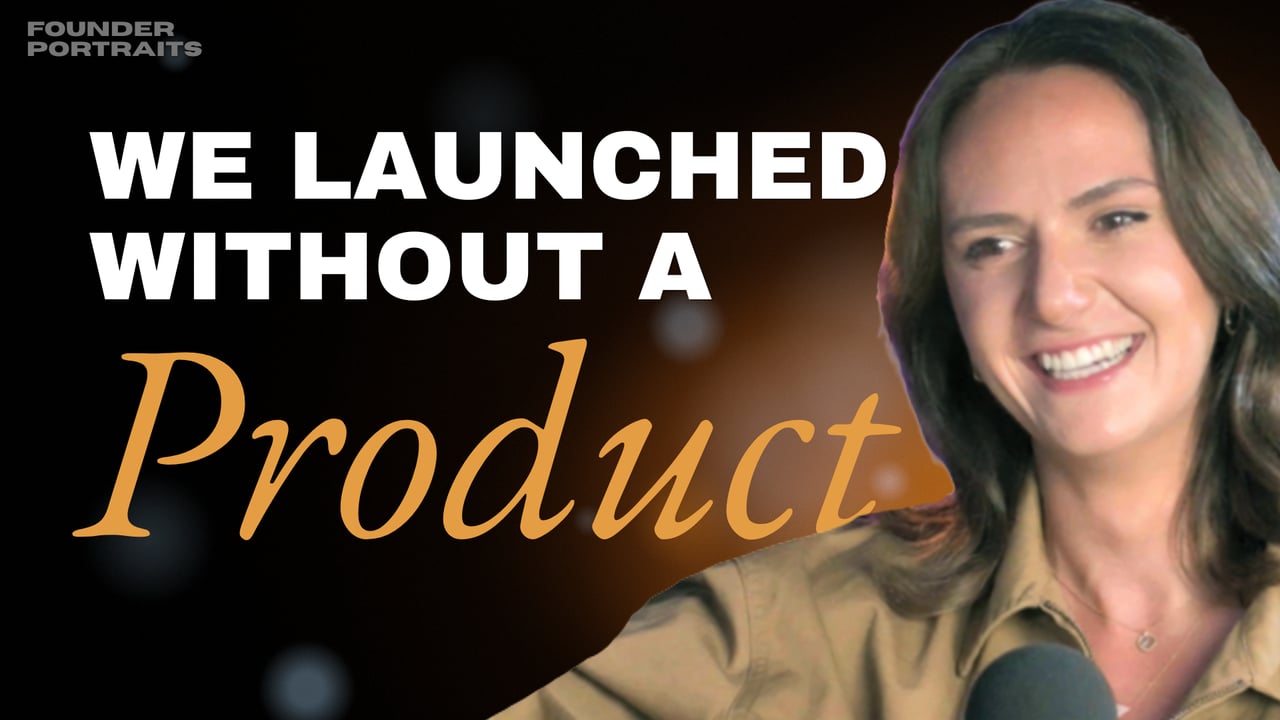
Kirsten Breidenbruch
VP at BlackRock to Quitting With No Plan

Summary
Kirsten Breidenbruch spent a decade at BlackRock. She made VP. She was making great money. From the outside, she had everything figured out. From the inside, she was waking up two hours early every day just to calm herself down enough to walk to work. Her feet felt like cinder blocks. Her body was rejecting the life she built. In this conversation, Kirsten takes us inside the war between the identity she spent years constructing and the person she was becoming underneath it, the panic attacks she masked, the mindfulness sessions she led at work while quietly falling apart, the spreadsheet she made to see if she could afford to quit (and then ignored for months), and the walk on the beach with her dad where she finally said it out loud. She talks about what it actually feels like to dismantle a life that looks perfect, why she wore a white Anthropologie dress to her quitting meeting, and the moment her boss called an hour after she resigned and said "I'm kinda jealous." This is for anyone who has everything they're supposed to want and still feels like something is fundamentally wrong.
Transcript: Kirsten Breidenbruch on Founder Portraits
0:00How family conditioning shaped her corporate path
ChristianneKirsten Breidenbruch, thank you so much for coming on. Your story is a unique one, but it's also really familiar to me, and I think to a lot of people who've been in the corporate world, and who've left it. Give us a quick summary of where you've worked.
KirstenMy career began in finance. I started very young, on the trading floor at BlackRock, in my very first internship, and I stayed there for the ten years that followed. Now I own my own coaching business. So a very different place from where I started.
ChristianneBefore BlackRock, before finance, what was the script you'd been handed about who you should become?
KirstenWhen I think about my past, I was so focused on survival. Money is the most important thing. If you don't have money, how will you survive? I made every choice based on that belief, which is why I ended up in finance. If I understand money, I'll be successful and in control of my survival, and I'd heard people in finance make a lot of money. So my script was: be successful, do what your parents and grandparents want, get the nod. I never once asked myself, is this what I want to do? I did things for approval and for money, because that's what success was to me. And I'm very driven, so I put one and one together and went down that path.
ChristianneFamily is one of the most influential factors in how we're conditioned to see success. What was it like at home?
KirstenIn a weird way, my parents let us do whatever we wanted. But when I was younger, I watched my dad go through a lot of cycles in his career, getting laid off, getting another job, and he always seemed very stressed. I remember thinking, I don't want that to be me. I also sensed he wasn't always very responsible with money, and I made sure to do the opposite. So the beliefs I took from that were: don't get laid off, don't ever get fired, get approval, do what people tell you, never go against the stream. Money and approval. Maybe not directly from my parents, but from what I saw.
3:56Searching for external validation, and starting to heal
ChristianneI'm hearing a chase for financial security, and status security too. When you started at BlackRock, one of the largest companies in the world, were you proud?
KirstenI went to Drexel, and they talked about BlackRock like it was the greatest organization, up there with Goldman Sachs. When I got the interview, I thought, there's no way I'm getting this job. I'd done about ten interviews for internships, and I walked out of that one thinking it was my worst. Then I got the call. I still have the voicemail on my phone, because it used to make me feel so proud. Now I feel differently about it. But at the time, it validated my need to be secure: I'm on the path to making a lot of money, and I'll never have to worry. And it meant I was successful. When you go home for the summer in college and say, I got an internship at BlackRock, that was validating.
ChristianneIt became part of your identity right away. You've also mentioned a long journey with mental health, starting therapy around 19. What was happening then?
KirstenI was in one of my first relationships, and a boyfriend was another form of approval. You're enough, you mean something, if you have a boyfriend and a good job. It's hard to answer these questions, because I've done so much work on myself that I have to stretch back to remember who that person was. But if I speak for her, she was looking for approval from the outside. Now I know approval comes from you. You don't get it because you have a boyfriend or a job. I kept making the choices society said were right, and they weren't making me feel any better. It took me a long time to figure out why the pain was there.
I had a very low sense of self-worth, which is why I put so much emphasis on external success. At 19 or 20, that looked like putting all my energy into everything but myself. With my boyfriend, I isolated myself, stopped taking care of my health, and did whatever he wanted to make sure he was happy. At work, it was doing things for other people's approval. What do I need to do to succeed in this internship? Never, what do I want? It led to losing friends and living a very isolated life. Of course I was suffering. Of course I had anxiety. I was completely ignoring myself.
ChristianneOver the next seven to ten years you didn't ignore it. You did therapy, yoga, meditation, self-help books, all while you were at BlackRock. What was the gap between the self-awareness you were building and the life you were leading?
KirstenBack then, I didn't have the self-awareness yet. What I had was the pain, and I couldn't figure out why it was there. The books and yoga and therapy and meditation were me trying to make sense of it, and over those years, that's how I built the self-awareness. After the breakup, one of the lowest points for my mental health, I learned my first meditation exercise: that you can let a thought pass through your mind. You don't have to hold on to every thought. Little skills, one step at a time. But it was so confusing, because I had one of the best jobs out of college, I was making more money than most people, I had a boyfriend. Everyone said that's what makes you happy. So why do I feel this way?
ChristianneDid you ever think, I've read my tenth self-help book and I'm not cured?
KirstenNo, I was addicted to them. My mom asked, why don't you read some fiction? And I said, no, these are the only books I like. It became an obsession: getting better, getting smarter, improving myself. My body's signal for help was the anxiety, and the books were how I coped and found comfort. Reading and journaling are still my tools today. When I have a bad day, that's where I go. It started from pain, and it became part of me.
11:51Authenticity versus the corporate self
ChristianneThen you became a leader of mindfulness at BlackRock, leading sessions and helping others. Were you helping other people do what you couldn't do for yourself?
KirstenI don't think so. I'd found it so profoundly helpful that I wanted to share it. Nobody told me to. I just felt I had to. I could see others feeling what I felt, the pain and depression without knowing why. So I led meditations and held events. I did a walking meditation once, and people said, I've never even thought to do this. I was amazed that I'd been exposed to it for years and some people had never heard of it.
ChristianneWas there vulnerability in that, teaching people who might be more senior than you?
KirstenI have two answers. One part of me loved it and felt so comfortable. It was the one part of work that felt true to me. But I remember leading a meditation in the big auditorium in New York and feeling the mask pulling off a little. This is really me, and I'm going to share it at work. It felt like being naked at work. I'd give a little speech at the beginning, and they were really going to see who I am. It was almost an unveiling.
And authenticity has always been me. I've always been a very bad liar. That's why the contrast between my inner desires and what my life looked like was so painful. Authenticity is one of my core values.
ChristianneWhen did you first notice a misalignment between you and the firm, and what told you to stay?
KirstenI think I always knew. A colleague who worked with me for about five years reminds me that from the moment she met me, I said, when I become a VP, I'm going to leave and become a therapist. I didn't consciously register that I was telling people that. That's your intuition, your inner knowing. And that's why I was always seeking what's next: the next title, the next salary, the next team. I couldn't live in the moment, because I wasn't content. That was the biggest sign.
What kept me there was the need to survive, to always have an abundance of money, above everything else. I always wanted to live in California, too, and I couldn't connect the dots. I wasn't brave enough to ask, at what point do my desires outweigh this checklist I've already checked off? The longer I grappled with it, the more painful the contrast between my desires and my reality became.
ChristianneWhat was the internal dialogue?
KirstenPanic. I couldn't think straight. I knew something was wrong, and I couldn't settle myself enough to ask what I wanted or what the next step was. That's why I was stuck, and why I didn't leave until it got so bad that everything blew up. The idea of quitting my job didn't even come to me until the very end.
ChristianneIt sounds like there was an identity you were protecting by staying.
KirstenI was always the one who had it together, especially in my family. I'm a middle child, and I took on everyone's problems. When my older sister needed help with her mortgage, I stepped in. When my dad needed help financially, I stepped in. When my mom was in emotional chaos, I helped her. So I felt this burden: you're not allowed to be the one who doesn't have it together. You're the strong one. And I was bursting at the seams. I didn't want to be the strong one anymore. I was there for everyone but myself. I'll talk all day about how middle children carry a burden nobody talks about.
ChristianneI'm also a middle child.
19:37The new role that showed her an unbearable future
ChristianneYou had a role change at BlackRock that put a flashlight on so much for you.
KirstenAgain, I was chasing the next thing, because I wasn't satisfied. I joined a new team in an elevated, highly visible role. Vice president. This is it, I've made it. And on day one, the energy was off. I told myself it's just because I'm new. Eight months later, two people were left on a team of eight, and I was the newest member, basically leading the team with no idea what I was doing. It was soul-crushing. This was supposed to be my successful moment, and nothing was going right.
It made me look at myself. Maybe this isn't soul-crushing. Maybe it's showing me this path isn't meant for me. I was doing a lot of walking at the time, and on one walk I thought, if I'm in this role at 65, I'm not going to make it. That's when the idea of leaving started.
ChristianneWhat did you recognize in yourself in that broken team?
KirstenThat these are not people I want to be. I was finally in a part of the firm that was doing really well, and I looked around and thought, these are the people I'd have to become to be more successful from here. No shade to them, everyone has their reasons, but they were very toxic, and they weren't welcoming or nice to me. I'd seen everything I needed to see. I had no desire to be a senior leader at the firm if that's who I'd have to be.
ChristianneWhen people started leaving, did you think you should leave too, or that you had to fix the mess?
KirstenAt first I took it as a good sign. More opportunity, more responsibility, maybe they'd promote me sooner. But as it kept going, I thought, wait, is everyone leaving? It was like getting beaten up. At first you fight back, and then you get pounded so many times that you say, I surrender. I'm a big universe and God person, and it felt like God was showing me it was time to take the exit, and if I didn't listen, something worse would happen.
ChristianneYou describe yourself as someone who doesn't quit. Where does that come from?
KirstenI've always believed there's nothing that can't be figured out. Where there's a will, there's a way. But I didn't have the will anymore, so there was no way. And it came from needing to be the strong one. You're not allowed to quit. That's not in the rule book. It cost me years of pain, staying in situations and relationships, doing things I didn't like, living an inauthentic life that made me so damn miserable.
Now I realize quitting isn't real. You choose to be in a situation or you don't, and making the choice that's best for you is what matters. It has nothing to do with failure. I think I was failing by not quitting. When you give up on yourself and your own inner voice, that's failure.
ChristianneThat should be the title of a book. What did that team bring out in you that didn't feel true?
KirstenMy tendency to shape-shift, or people-please. Don't go against the grain. Do what everyone else does. Be mean to the juniors, talk politics, agree with people. Wall Street is so political, you know this, and I was getting caught up in drama I didn't need, and it was draining me. It was a time of tension. The old self who needed to succeed at all costs was stripping away, but she was still there a little, still willing to get a little dirty.
I remember one moment with my boss at the time. Our desks were right next to each other, and she was coming at me, trying to get a reaction, trying to get me to mess up. And I just got up and walked away without saying anything. That was new for me. She was shocked. I disappeared for two hours to get coffee, because I needed to calm down and I didn't want to go back and retaliate. Later that week she called me and apologized. Usually I'd take the bait and make myself look bad. That was my self-awareness coming into play: you don't want to react, because it's not you.
I took a lot of those two-hour coffees, honestly. It was avoidance. My body was leaving, but only for two hours. We couldn't quit for eight hours yet. The fight between my old self and my new self was warfare inside of me.
29:14The physical toll, and finding the words for I can't
ChristianneYou said the idea of doing this forever made you sick. Was that a thought, or a physical sensation?
KirstenFull body. Mind, body, soul. In that position, you pretty much know what your road looks like. You'll make director, then MD, you'll make more money and deal with more politics, you'll be miserable, you'll probably marry someone in the same industry who's also miserable, and that'll be the end. I could see the road playing out, and I was desperate not to know what was going to happen. That path was a hard no.
My body knew I couldn't take my situation any longer. That was the anxiety, the panic attacks, the depression. Every day I had to wake up two hours early just to calm myself down. My feet felt like cinder blocks. The thought of walking myself to work, I'd think, I can't do it, come on, you can do it. My body was completely rejecting it. I started calling in sick, and I was never like that. I was always, you have to show up and do the work. It was full-body resistance. A war inside of me. I really think it was my soul saying, you have to go, please listen to me.
ChristianneWhen you decided to quit with nothing lined up, was it a single moment or a slow burn?
KirstenI first let myself think about quitting in April. I made a spreadsheet: this is what I'd need to survive, these are my options. Then I thought, this sounds scary, I don't like it, and I never looked at the spreadsheet again. I kept going to work, and things kept getting worse.
The moment came at a Soho House event on women in entrepreneurship with my friend Juliana. I'd had no exposure to entrepreneurship, but I felt pulled to go. Listening to the women speak, I wanted to be more like them and less like the person I was. They handed us a brochure for a writing retreat as we walked in. And they passed the microphone around, and I'm not someone who used to speak up, but I did, and I cried in front of everyone, sharing the pain I was feeling in corporate. People came up afterward and hugged me. Juliana said, I've never seen you like that. That was my new self emerging. It opened my mind just enough to see another path, and once I got into the retreat, I thought, I'm good with quitting.
ChristianneWho was the first person you told?
KirstenMy dad. I didn't call anyone. I waited until I saw him in person, and we went for a walk on the beach. He looked at me and said, you don't look well. You look very thin, and something feels off. I took that as an opening and said, Dad, something is off with me. I can't do this anymore. I think I have to quit. And he said, whatever you have to do, I will support you. He could see the toll it was taking, and he didn't need any more information. I'm tearing up a little, you can't tell.
He knows I'm a fighter. He knows I'm not a quitter. So if I'm saying this, he knows to listen. Something's wrong.
ChristianneThat's a special kind of trust, that when you say it, they believe you mean it.
KirstenI never thought of it that way, but you're right. It's proof of the trust we've built over time.
37:04The white dress, her boss's jealousy, and what came next
ChristianneTake me to the day you quit.
KirstenThe first trigger I pulled was telling my landlord I wasn't renewing my lease. I'd planned to quit in line with my lease ending, for a clean break: leave the city, everything. She replied, no problem, and I felt so much relief. Then I took two weeks off, and on the last night of vacation, at 9 p.m., I sent a 30-minute meeting invite for 7 a.m. the next morning, before the workday started. I wasn't going to sit at my desk all day thinking about quitting. I was going to walk in and get it done. The night before, I thought, how do you quit something? I don't even know how to quit.
ChristianneDid you have a quitting outfit?
KirstenObviously. I had to look good. I wore a white dress from Anthropologie that wasn't really Wall Street appropriate. It made me feel rebellious. I'm going to look good and quit and bye.
ChristianneI wore black, because it was the funeral for my finance career.
KirstenWe all need our little quirks.
One boss was on video and one was in the room. Nobody had accepted the invite. I walked in and said, good morning, did you see the invite? And he said, yes, we're meeting at seven, right? He definitely knew at that point. I hadn't given them any notice, because on Wall Street you have to protect yourself to the end, and in case I changed my mind, I didn't want to screw myself over. They'd been monitoring me closely, since everyone else had quit, and I'd kept doing really good work right to the end.
It was short. After all the turnover I'd been moved to another team for my last month, so we didn't really know each other. All they wanted to know was where I was going, because everyone was leaving for competitors. I said, I'm not going anywhere. I'm going on a writing retreat in August. That's all I've got for you. I'm going to figure my shit out, because this has been terrible and I'm on my last surviving mental string.
ChristianneYou were quitting their game entirely. They were probably jealous.
KirstenThey were! One of my bosses called me about an hour later and said, I have to say, I'm kind of jealous.
ChristianneDid any part of you worry they'd think you were a loser for leaving the rat race?
KirstenMaybe a teeny part. But they'd dragged me through the mud, so their opinion meant nothing to me anymore. I did make it sound like the most glamorous, exclusive writing residency in the world, of course. And it was a fantastic residency.
I had to stay another week and a half, because we were so understaffed. I felt pure freedom. You're all stuck in this cage and I'm out. I spent that week and a half getting coffee with everyone and telling them, I quit, great working with you. My goodbye tour. Right after the meeting, I got in the elevator with one of the most important people in the business, who'd just been told I'd quit. We said hello, and nothing else. We were equals now.
ChristianneThe dynamics melt away when you leave the structure. It's funny how made up corporate structure is.
KirstenAfter the residency, I went to my grandparents' place in Germany. Living in New York, you don't know what slowing down is unless you're asleep. In Europe people sit and eat breakfast and lunch. I loved it. But the old self kept saying, be productive. I fought that so hard. From August 1 to September 1, I told myself, you're not going to think about doing anything. I'd never done that in my adult life. I started at BlackRock part-time while I was still at Drexel, with no break, ever. Twelve years. I took the biggest breath I'd ever taken.
When I came back, I tried to get back into finance. I did networking calls and interviews with my old, rehearsed script, saying, I'm ready to come back, when I was so not ready. Every message I sent, I thought, I don't even want to talk to this person. The dread came back. My body was saying, you have to listen, this isn't your path. It was the last battle of the war, for about a month. Then I let go of my fear of not having money and stopped making the calls. You'll make your own money, the way you want to.
On the flight home from Europe, there was a delay, and normally I'd be furious. Instead I sat in the window seat in this state of complete aliveness. Before, I couldn't sleep because of anxiety. Now I couldn't sleep because I had so many ideas. My business just arrived in my brain. I'd never been someone who wanted to start a business. I still have the note on my phone: create an email, make an Instagram, register your LLC, make a TikTok, make a website. I had no idea what I was doing. The name I wanted was taken, which is why it's Wellth by Kirsten.
47:41Building an aligned life and coaching other people out
ChristianneHow are you different now, not just in your career but internally, from the person leading mindfulness sessions at BlackRock?
KirstenAs soon as you say that, I get emotional. She's so different. She's so peaceful and so happy. Every day I wake up so happy. And it makes me sad that people don't know life can be this way. You don't have to live in suffering. That's why I built my business, to help people feel this. Every day is a gift and a chance to be happy and do what you love with people you love. It doesn't have to be so sad and tense.
ChristianneDo you grieve the person you were?
KirstenI'm at peace with her. She did the best she could with the understanding she had at the time, and she was necessary for me to become who I am today. It's forgiveness, for putting myself through pain I didn't need to go through. But that pain was part of the process. You can't know what you don't know until you learn it.
ChristianneWhat's something about this journey you haven't said publicly yet?
KirstenThat entrepreneurship is hard. In corporate, it wasn't hard. It was painful. Pain and hard work are very different things, and we think they're the same. Now I'm working really hard, long hours, figuring out how to make this work. But every night I go to sleep at peace and happy. So choose your hard. You can live in pain on the easy path, with someone else paying you and your little structure, and you can still get laid off. Or you can build the life you truly want, and it's going to be extremely hard for a very long time. It's hard either way. It can be hard and you're happy, or hard and you're in pain. I'd choose hard and happy over and over again.
ChristianneIs there anything else people should know?
KirstenThat you can live a life that's successful and aligned with who you are. You have to work hard, want it, and know why you're doing it, but it's possible. We were never meant to live in pain and suffering. If you have an inkling that you're not where you're supposed to be, please listen to it. It's guiding you where you need to go. You are your own best expert. Listen to yourself and trust yourself.
ChristianneKirsten, thank you so much for your time and your story.
KirstenThank you for having this podcast. It's so wonderful for everyone to hear.